Stable Tooth Replacement for Reduced Bone Conditions
Basal implants are an advanced solution for replacing missing teeth in patients with limited bone availability, where conventional implants may not be feasible. Unlike traditional implant systems, this technique utilizes the stronger basal bone, allowing treatment without extensive bone grafting and enabling faster functional restoration.
Basal implants are designed to:
Timeline
| Factor | Basal Implants | Conventional Implants |
|---|---|---|
| Bone Requirement | Works in low bone | Requires adequate bone |
| Loading Time | Immediate | Delayed |
| Need for Grafting | Usually avoided | Often required |
| Treatment Duration | Short (10–15 days) | Longer |
| Indication | Compromised bone cases | Routine cases |
| Factor | Basal Implants | Removable Denture |
|---|---|---|
| Stability | Fixed | Removable |
| Comfort | High | Moderate |
| Function | Efficient chewing | Limited |
| Aesthetics | Natural | Variable |
| Factor | Basal Implants | Conventional Bridge |
|---|---|---|
| Tooth Preparation | Not required | Adjacent teeth reduced |
| Invasiveness | Surgical | Non-surgical |
| Longevity | Long-term | Moderate to long-term |
| Bone Preservation | Yes | No |
A detailed consultation will help determine:
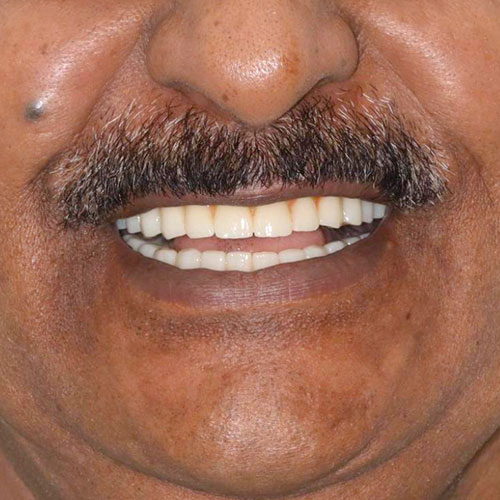
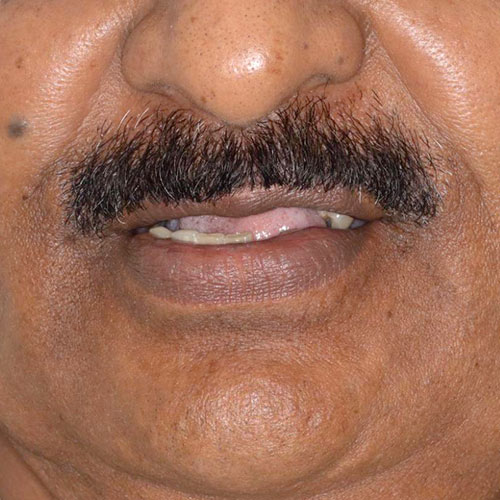
“Very satisfied with my full mouth rehabilitation using basal implants. The best part was that it didn’t require bone grafting and I got fixed teeth quickly. The care and expertise were outstanding.”
Basal implants are an advanced implant system designed to be placed in the dense basal bone, allowing stable tooth replacement even in cases with reduced bone availability.
They are particularly useful in situations where conventional implants may not be feasible due to bone loss. Basal implants allow faster fixed tooth replacement and usually avoid the need for bone grafting. They are considered when natural teeth cannot be preserved and a stable, long-term replacement solution is required.
Basal implants utilize deeper, stronger bone and are typically immediately loaded, whereas conventional implants often require sufficient bone and a healing period before loading.
This makes basal implants especially beneficial for patients seeking quicker restoration and those with reduced bone support.
They are suitable for:
A detailed clinical and radiographic evaluation is required to confirm suitability.
Basal implants are technique-sensitive and are recommended only in specific clinical situations. A thorough evaluation is essential to determine whether this approach is the most appropriate and safe option for you.
Basal implant treatment is usually completed within 10–15 days, including placement and fixing of the final teeth.
In most cases, temporary or fixed teeth are provided quickly, allowing patients to maintain function and appearance during the treatment phase.
The procedure is performed under appropriate anesthesia. Most patients experience minimal discomfort, similar to other dental procedures.
Mild discomfort or sensitivity may occur for a short period after treatment. This is temporary and manageable with medication and care instructions provided by your dentist.
Yes. Once the fixed prosthesis (crowns/bridges) is placed, patients can begin functional chewing, following initial care instructions.
In most cases, bone grafting is not required, as basal implants are designed for use in patients with limited bone.
Basal implants are designed as a long-term fixed solution, provided proper care and maintenance are followed.
Success depends on case selection, clinical planning, and surgical expertise. With proper protocols, they can provide stable and predictable outcomes.
Basal implants are technique-sensitive and not suitable for every case. Proper evaluation is essential before treatment.
Consistent care is essential for long-term stability and success.
The cost depends on the number of implants, type of prosthesis, and overall complexity of the case. A detailed consultation and personalised treatment plan are provided to ensure complete clarity before proceeding.
We provide advanced implant solutions tailored to individual clinical conditions, focusing on stability, function, and long-term oral health.