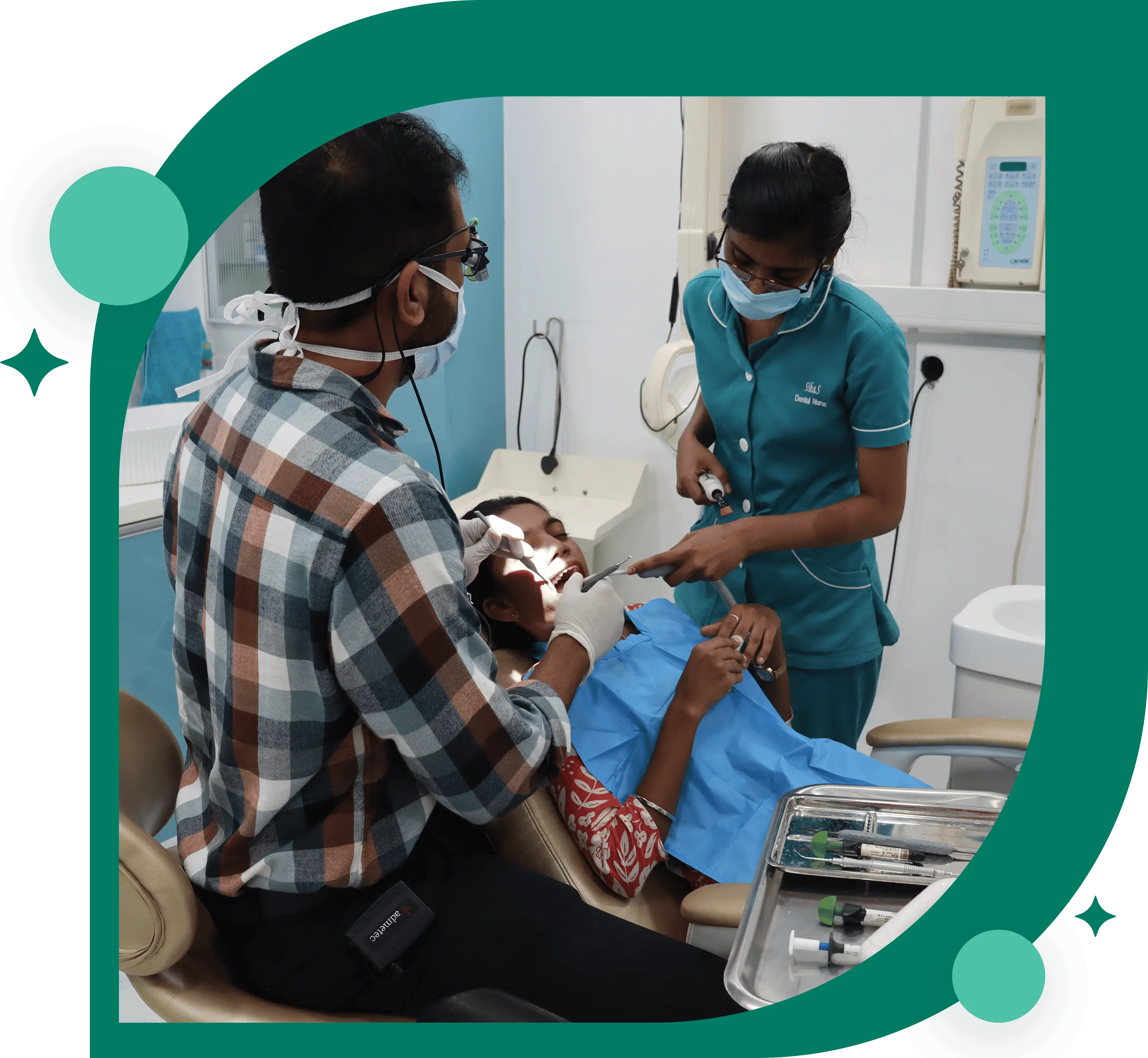
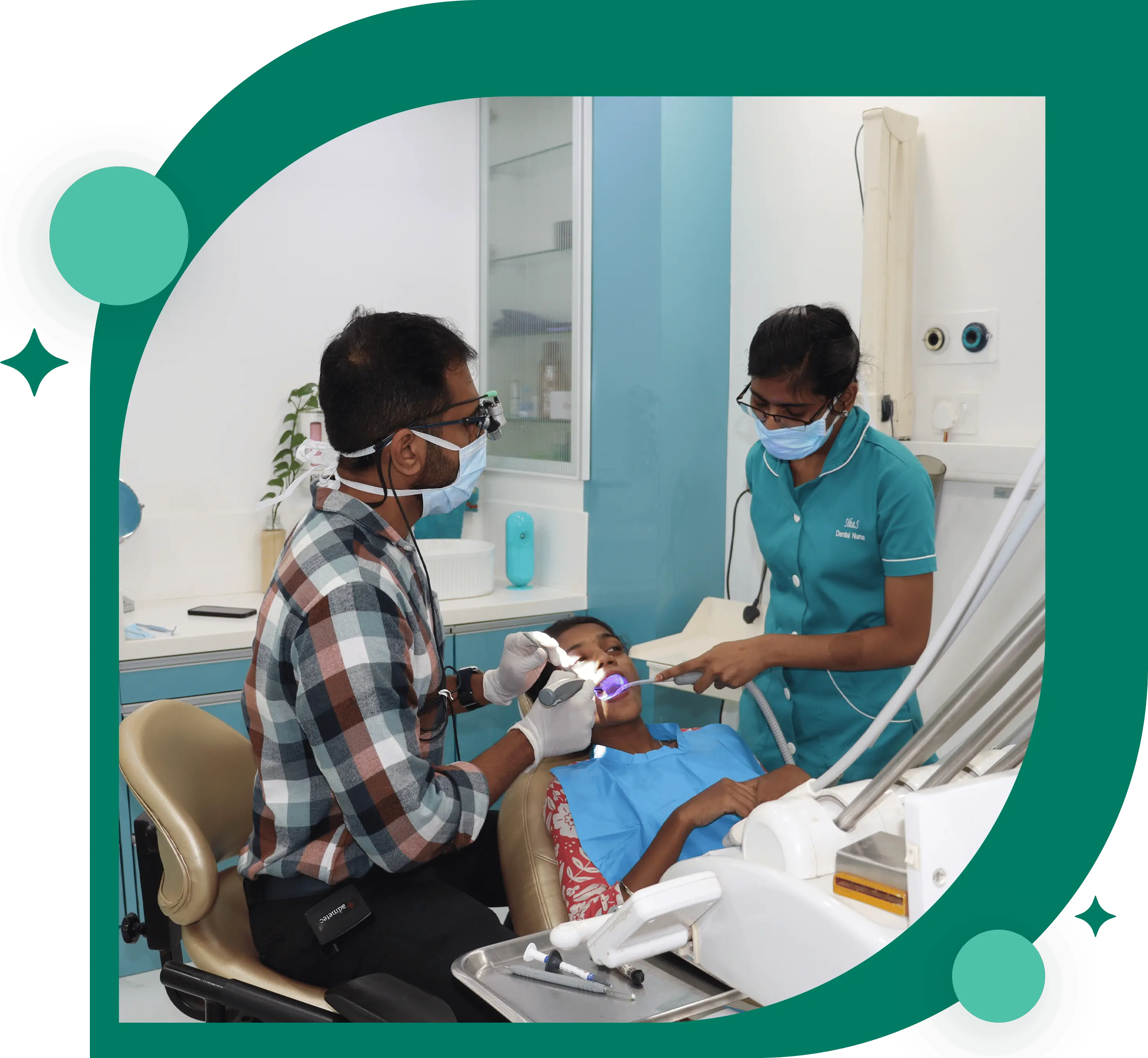
Rebuilding Teeth. Restoring Function. Preserving Natural Smiles.
At Craft 32 Dental Care, restorative dentistry focuses on repairing and rebuilding damaged or missing teeth — restoring strength, function, comfort, and natural aesthetics. Whether treating early decay or managing complex dental damage, every restoration is designed to preserve natural tooth structure while ensuring long-term durability and aesthetic harmony. Led by Dr. A. Arul Pradeep, treatments are delivered using advanced materials, precision techniques, and personalised planning.
Restorative dentistry includes procedures that repair or replace teeth affected by :
You may require treatment if you experience:
Early intervention prevents more complex procedures.
Understanding the stage of damage helps determine the right treatment:
Comprehensive solutions for every stage of dental damage.
| Problem | Recommended Treatment |
|---|---|
| Tooth pain or cavity | Filling / Root canal |
| Broken or weak tooth | Crown |
| Missing tooth | Bridge / Implant |
| Multiple damaged teeth | Full rehabilitation |
At Craft 32 Dental Care, restorations are created using high-quality, internationally aligned materials, including:
This ensures durability, precision fit, and natural appearance.
Preserving maximum natural tooth structure
Detailed diagnosis and customised treatment
Restorations designed for strength and natural appearance
Each treatment plan is carefully customised based on medical condition, bone health, and patient comfort.
Longevity depends on care and maintenance.
A detailed consultation will help determine:
Yes. Composite (tooth-coloured) fillings are designed to blend seamlessly with your natural teeth, providing a more aesthetic result. They also require less removal of healthy tooth structure compared to traditional silver (amalgam) fillings, making them a more conservative and modern treatment option.
In many cases, yes. Treatments such as root canal therapy, crowns, and advanced restorative procedures are specifically designed to preserve natural teeth and restore their strength and function. When a tooth cannot be saved, suitable replacement options are carefully considered to maintain oral health and balance.
The choice depends on the extent of damage to the tooth. Minor cavities can typically be treated with fillings, while more extensive damage may require crowns or advanced restorative procedures. A detailed clinical evaluation helps determine the most appropriate and long-lasting solution.
Restorative treatment is planned based on a thorough clinical examination, assessment of tooth structure, and diagnostic imaging where required. The goal is to restore function, strength, and aesthetics while preserving as much natural tooth structure as possible.
Treatment duration depends on the procedure. Simple fillings may be completed in a single visit, while crowns, bridges, or advanced restorations may require multiple appointments. A clear timeline is provided after evaluation.
No. Most procedures are performed under local anaesthesia, ensuring comfort throughout the treatment. Any post-treatment sensitivity is usually mild, temporary, and resolves quickly.
You may experience slight sensitivity or mild discomfort for a short period, especially with temperature changes or chewing. This is normal and typically settles within a few days with proper care.
Yes. Modern restorative procedures are safe when performed with proper clinical protocols and materials. At Craft 32 Dental Care, treatments are planned with precision to ensure long-term success.
No. In fact, restorative treatments are designed to strengthen and protect the tooth. Procedures such as crowns reinforce weakened teeth, restore structural integrity, and allow normal function.
With proper care, restorations can last many years. Their longevity depends on factors such as oral hygiene, biting forces, material used, and regular dental maintenance. Routine dental visits are essential to monitor and maintain restorations.
Yes. Worn-out, damaged, or discoloured restorations can be replaced to restore function, prevent further damage, and improve aesthetics.
Maintaining good oral hygiene, avoiding excessive biting forces (such as chewing hard objects), and attending regular dental check-ups play a crucial role in extending the life of restorations.
Delaying treatment can allow the problem to worsen — leading to increased damage, infection, or even tooth loss. Early treatment is always simpler, less invasive, and more cost-effective.
The cost varies depending on the type of treatment required, the extent of damage, and the materials used. A detailed consultation allows us to provide a clear and personalised treatment plan with transparent pricing.
A Confident Smile Begins with Precision Care
Schedule your consultation and take the first step toward a balanced, well-aligned smile.